
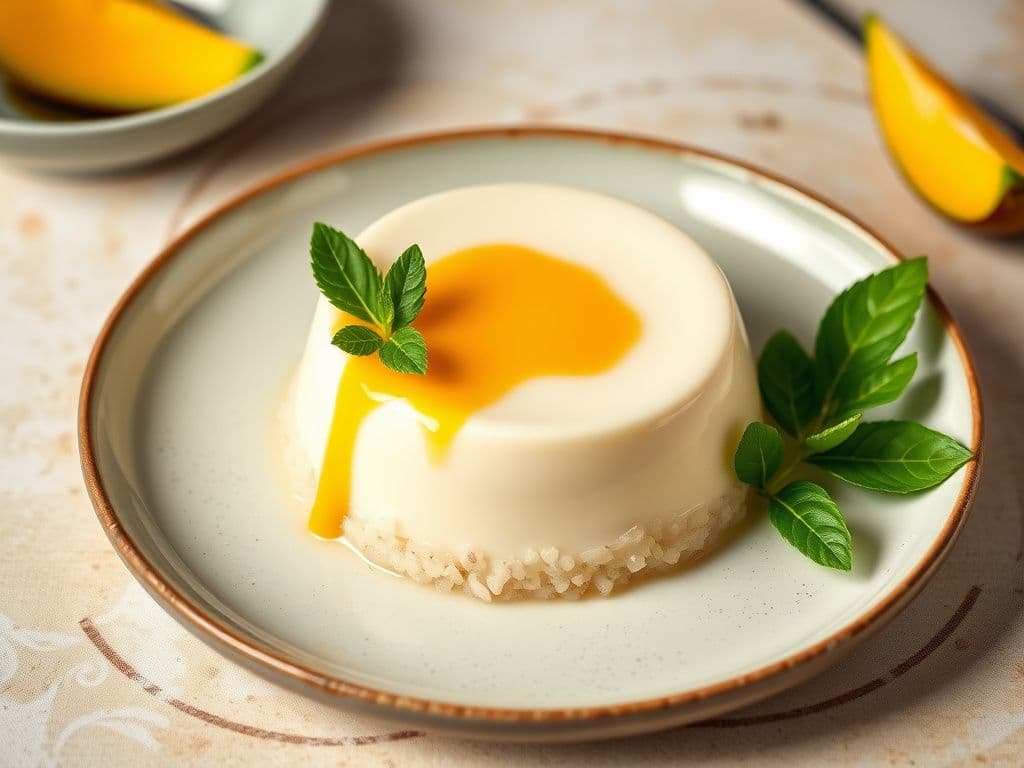
Mango Sticky Rice Panna Cotta
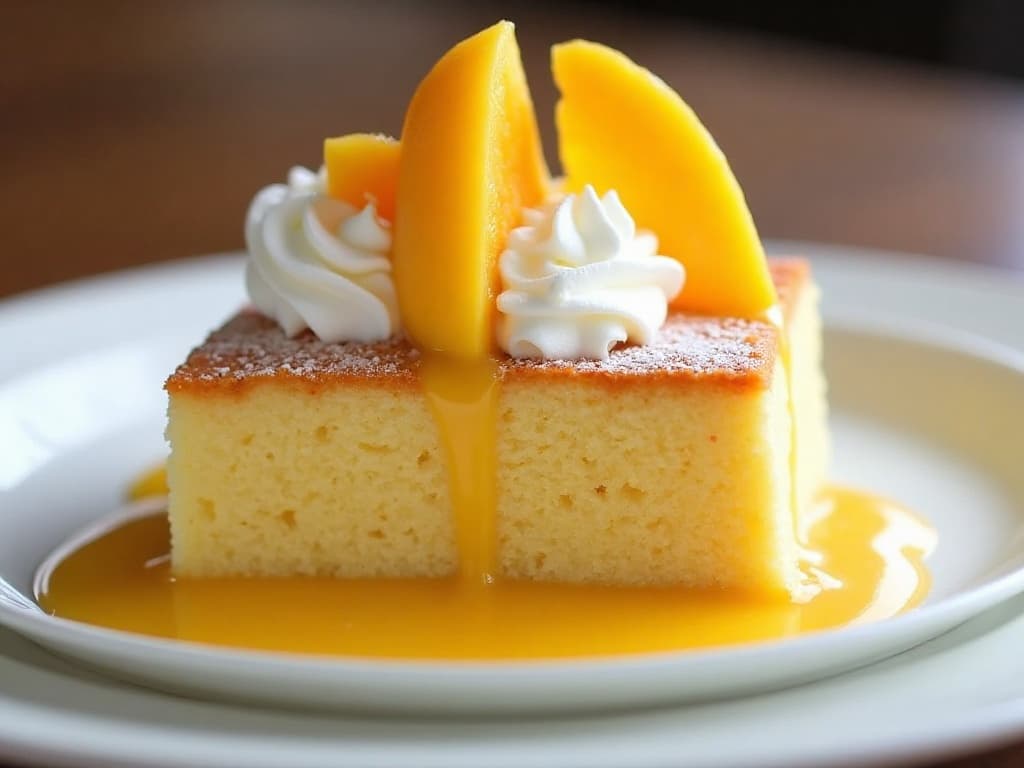
A stunning fusion mango dessert that layers silky coconut panna cotta with fresh mango purée and a sweet sticky rice base — the ultimate mango mango dessert for tropical flavor lovers at around 320 calories per serving.
Added by Recipe Organizer Team
25m
6
Click to copy recipe URL and open the app
Ingredients
- 3 large ripe Ataulfo or Alphonso mangoes (about 2 lbs total), divided
- 1 cup glutinous (sticky) rice, rinsed
- 1 can (13.5 oz) full-fat coconut milk, divided
- 1/4 cup granulated sugar, divided
- 1/4 teaspoon fine sea salt, divided
- 2 1/4 teaspoons (1 packet) unflavored gelatin powder
- 3 tablespoons cold water
- 1 cup heavy cream
- 2 tablespoons honey
- 1 teaspoon pure vanilla extract
- 1 tablespoon fresh lime juice
- Fresh mint leaves and toasted sesame seeds for garnish
Instructions
- 1
Cook the Sticky Rice
Soak the rinsed glutinous rice in cold water for at least 1 hour, then drain. Steam the rice in a bamboo steamer or fine-mesh sieve set over a pot of simmering water, covered with a lid, for 18–20 minutes until the grains are translucent and tender but slightly chewy.
- 2
Season the Sticky Rice
While the rice is hot, whisk together 1/2 cup of the coconut milk, 2 tablespoons of the granulated sugar, and 1/8 teaspoon of the salt in a small saucepan over low heat until the sugar dissolves, about 2 minutes. Pour this coconut sauce over the hot sticky rice, stir gently to combine, and let it absorb for 10 minutes. The rice should be glossy and fragrant.
- 3
Bloom the Gelatin
Sprinkle the gelatin powder evenly over the 3 tablespoons of cold water in a small bowl. Let it sit undisturbed for 5 minutes to bloom and soften — it will look spongy and swollen. Do not stir.
- 4
Make the Coconut Panna Cotta Base
In a medium saucepan, combine the remaining coconut milk, heavy cream, remaining 2 tablespoons of granulated sugar, honey, vanilla extract, and remaining 1/8 teaspoon of salt. Heat over medium-low, stirring gently, until the mixture just begins to steam and the sugar is fully dissolved — do not boil. Remove from heat and immediately add the bloomed gelatin, whisking until completely dissolved and smooth.
- 5
Prepare the Mango Purée
Peel and dice 2 of the mangoes. Place the mango flesh in a blender with the fresh lime juice and blend on high until completely smooth. Strain through a fine-mesh sieve for an ultra-silky texture if desired. Set aside 1 cup of the purée for layering and reserve the rest for topping.
- 6
Layer the Dessert Cups
Divide the seasoned sticky rice evenly among 6 serving glasses or ramekins (about 3 tablespoons per glass), pressing gently to create a compact base layer. Carefully spoon or pour about 2 tablespoons of the mango purée over the sticky rice in each glass, forming a thin mango layer.
- 7
Add the Panna Cotta Layer
Allow the coconut panna cotta mixture to cool to room temperature, about 10 minutes, so it doesn't melt the mango layer. Slowly and gently pour the panna cotta mixture over the back of a spoon into each glass, filling to near the top. Refrigerate for at least 4 hours, or overnight, until the panna cotta is fully set and wobbles gently when shaken.
- 8
Prepare the Fresh Mango Topping
Just before serving, peel and slice the third mango into thin, elegant fan-shaped slices or small cubes. Arrange the fresh mango on top of each set panna cotta. Drizzle with a spoonful of the reserved mango purée.
- 9
Garnish and Serve
Finish each glass with a few fresh mint leaves and a light sprinkle of toasted sesame seeds for texture and visual contrast. Serve chilled directly from the refrigerator. The layers of sticky rice, mango, and coconut cream should be beautifully visible through the glass.
Chef's Tips
The best mango mango dessert starts with the ripest mangoes you can find — Ataulfo (honey mangoes) or Alphonso mangoes are naturally sweeter and less fibrous than Tommy Atkins varieties. When cooling the panna cotta mixture before pouring, test it on the inside of your wrist — it should feel barely warm, not hot, to prevent the mango purée layer from blending into it. The sticky rice base is best made fresh the day of serving, as refrigeration can harden it slightly; if making ahead, let the assembled cups sit at room temperature for 10 minutes before serving.
Nutrition Facts
Frequently Asked Questions
Everything you need to know about making this mango sticky rice panna cotta
How long does it take to make Mango Sticky Rice Panna Cotta?
The listed total time is 45 minutes. Prep time is 25 minutes and cooking time is 20 minutes. Follow the instructions for any resting or chilling steps.
How many servings does this Mango Sticky Rice Panna Cotta recipe make?
This recipe yields 6 servings.
What is the difficulty level of this Mango Sticky Rice Panna Cotta recipe?
The listed difficulty level is medium.