
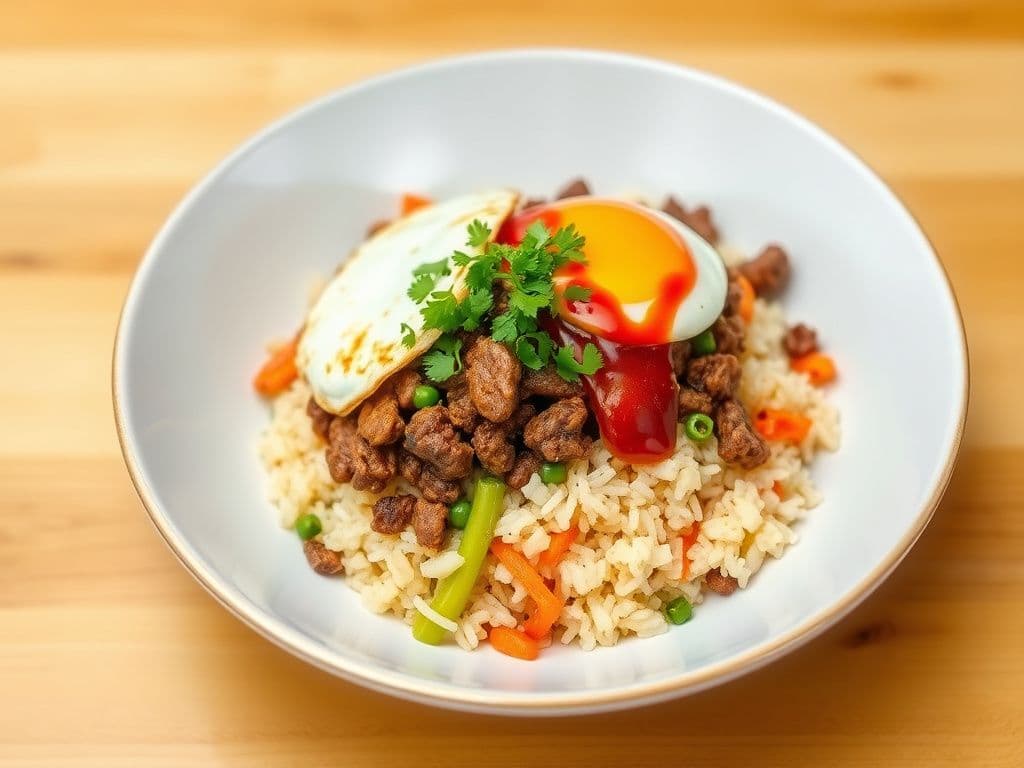
Korean Beef Bibimbap
A colorful Korean rice bowl topped with seasoned ground beef, crispy vegetables, a fried egg, and spicy gochujang sauce. A balanced 35-minute dinner with 32g protein.
Added by Recipe Organizer Team
15m
4
Click to copy recipe URL and open the app
Ingredients
- 1 lb ground beef (90% lean)
- 3 cups cooked short-grain white rice
- 2 cups fresh spinach
- 1 large carrot, julienned
- 1 medium zucchini, julienned
- 1 cup bean sprouts
- 4 eggs
- 3 tablespoons soy sauce
- 2 tablespoons sesame oil, divided
- 1 tablespoon brown sugar
- 3 cloves garlic, minced
- 1 teaspoon fresh ginger, grated
- 3 tablespoons gochujang (Korean chili paste)
- 1 tablespoon rice vinegar
- 1 tablespoon honey
- Sesame seeds for garnish
- Sliced green onions for garnish
- Kimchi for serving (optional)
Instructions
- 1
Season the beef
In a bowl, mix ground beef with soy sauce, 1 tablespoon sesame oil, brown sugar, garlic, and ginger. Set aside to marinate while you prep the vegetables.
- 2
Prepare the vegetables
Heat a large skillet with a drizzle of sesame oil over medium-high heat. Sauté spinach until wilted (1 minute), remove. Sauté carrots (2 minutes), remove. Sauté zucchini (2 minutes), remove. Blanch bean sprouts in boiling water for 30 seconds, drain. Keep each vegetable separate.
- 3
Cook the beef
In the same skillet over high heat, cook the seasoned ground beef, breaking it up with a spatula, for 5-6 minutes until browned and slightly caramelized. Remove and set aside.
- 4
Make the gochujang sauce
In a small bowl, whisk together gochujang, rice vinegar, honey, and 1 tablespoon water until smooth. Adjust spice level by adding more or less gochujang.
- 5
Fry the eggs
In a lightly oiled skillet over medium heat, fry 4 eggs sunny-side up until the whites are set but the yolks are still runny, about 3 minutes.
- 6
Assemble the bowls
Divide warm rice among 4 bowls. Arrange the beef and each vegetable in sections on top of the rice. Place a fried egg in the center of each bowl. Drizzle with gochujang sauce and sprinkle with sesame seeds and green onions. Serve with kimchi on the side.
Chef's Tips
The key to great bibimbap is mixing everything together right before eating — the runny egg yolk creates a rich sauce with the gochujang. For a crispy bottom, heat the rice in an oiled stone bowl or cast iron skillet until it forms a crunchy crust (called nurungji). You can swap ground beef for bulgogi-style sliced ribeye for a more traditional version.
Nutrition Facts

Frequently Asked Questions
Everything you need to know about making this korean beef bibimbap
How long does it take to make Korean Beef Bibimbap?
The listed total time is 35 minutes. Prep time is 15 minutes and cooking time is 20 minutes. Follow the instructions for any resting or chilling steps.
How many servings does this Korean Beef Bibimbap recipe make?
This recipe yields 4 servings.
What is the difficulty level of this Korean Beef Bibimbap recipe?
The listed difficulty level is medium.